Introduction
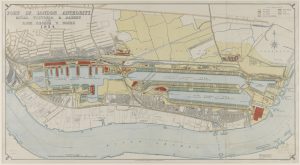
From 1981-1998 London Docklands Development Corporation (LDDC) was responsible for promoting regeneration of the Docklands area. One key aim was the retention of the historic docks and water space as an amenity for the area and providing opportunities for water sports and recreation.
In 1998 Royal Albert Dock Trust (RADT) received funding through a £17.45 million capital-only scheme funded by Sports Lottery, English Partnerships, Foundation for Sport and The Arts, London Region Sports Council and many other smaller grants and donations.
The building of the London Regatta Centre at the west end on the northern quayside of the Royal Albert Dock wasdesigned by Ian Ritchie Architects and was opened by HRH the Princess Royal on the 30th March 2000. It was awarded ‘Sports Building of the Year’ by both RIBA and the Royal Fine Art Commission Trust.
Part of the funding was used to increase the available rowing course from 1750m to the full Olympic/Paralympic race distance of 2000m, which can facilitate seven buoyed rowing lanes plus a return lane. This necessitated the removal and replacement of the Woolwich Manor Way Bridge at the eastern end of the dock. The new bridge was built further east and is now officially known as the Sir Steve Redgrave Bridge.
London Regatta Centre was expanded in 2016 to accommodate RADT’s Delivery Partners with funding support from Sport England and LB Newham.
Royal Albert Dock Trust
The Royal Albert Dock Trust (RADT) was established in 1992 as a charity (No. 1010519) to own and manage the London Regatta Centre (LRC), an operating company (No. 02702502), and the commercial arm of the charity, undertaking business activity with the revenue surplus being covenanted to Trust.
The Royal Albert Dock Trust is the Centre’s owner and holds the management responsibilities.
The core objectives of RADT are:
“the organisation and provision of facilities for water related and other physical recreation for the public benefit in the interests of social welfare, with the object of improving the condition of life of persons who by reason of their youth and/or social and/or economic circumstances have need of such facilities”.
Governance
The RADT’s Articles of Association were amended in 2014. These state that Directors (Trustees) will be mainly nominated by member organisations. These organisations are specified in a related Memorandum of Understanding also agreed in 2014. The general effect of these governance documents is to ensure, as agreed with Sport England, that RADT Trustees are largely drawn from watersports organisations and/or have watersports skills and experience. The Trustees therefore form a representative or stakeholder Board. The Trustees delegate day to day management responsibilities for the Centre to a salaried CEO and staff.
Business Model
The business model is straightforward: RADT aims to generate sufficient revenues from both watersports’ participation and from the commercial leasing of space at the Centre to cover the costs of staffing and running the Centre and providing an efficient and effective base for watersports activities. The model incorporates the expectation that a surplus of revenue over expenditure will be generated each year, that surplus being used to improve the Centre and to support additional watersports activities
The RADT and LRC operate from a single location at the western end of Royal Albert Dock. There are no plans to change or add to this operational location. The Delivery Partners and clubs have a variety of operational locations in addition to the Watersports Centre.
The Delivery Partners have tenancy agreements with RADT to use RADT premises and lease space for their equipment. Other users of the Centre typically pay a membership fee to their organisation or club and a main watersports revenue source for the Centre is boat storage fees from such clubs. Revenues are also received from day users and from watersports events.
Parts of the Centre and its curtilage are leased by RADT for a variety of compatible purposes including a large restaurant, a private gym, car parking and car rental. The Centre’s freeholder, reviewed these leases in detail to ensure that they are consistent with the terms of the RADT’s lease from the GLA, were appropriately drafted, and that the Board had proper oversight.
The income streams from these leases are very significant for ensuring RADT’s financial viability. The RADT’s aim is to maximise revenue from such leases if the use is compatible with the Centre’s day-to-day operations. The RADT also works with Delivery Partners and clubs to maximise throughput of users. The cost to users, however, must be reasonable especially for those with limited means and therefore throughput will significantly depend on external grants and other funding support to cover the costs of equipment and coaching.